Big data. Perhaps you’ve heard the phrase before. Perhaps you even have a good sense of what the term refers to. In layman’s terms, Big Data refers to any and all customer (or user) information gathered via various customer research initiatives. This may include questionnaires, email sign up forms, customer demographic surveys, mobile data, and other techniques. In more specific terms, Big Data is:
Big data. Perhaps you’ve heard the phrase before. Perhaps you even have a good sense of what the term refers to. In layman’s terms, Big Data refers to any and all customer (or user) information gathered via various customer research initiatives. This may include questionnaires, email sign up forms, customer demographic surveys, mobile data, and other techniques. In more specific terms, Big Data is:
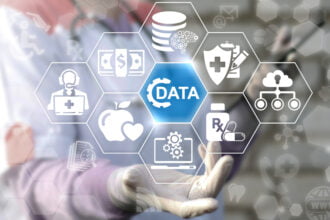
Extremely large data sets that may be analyzed computationally to reveal patterns, trends, and associations, especially relating to human behavior and interactions.
One of the challenges Big Data poses to businesses is the sheer magnitude of information contained within. Parsing through that information and finding patterns that can result in actionable strategies can be difficult. But for those businesses that manage to crack the nut that is Big Data, the reward and benefit is worth it. These companies are among the organizations leading the charge, and increasingly, are leveraging this information to higher and higher profits.
T-Mobile
It should come as no surprise that telecommunication and mobile phone companies like T-Mobile are adept at gathering and analyzing Big Data. After all, communication and data dissemination on a large scale is their bread and butter. When launching new devices such as the Galaxy S7 Edge, T-Mobile is able to predict customer interest with greater accuracy than ever, thanks to mobile data, social media data, and other indicators. This is hugely beneficial, as it provides invaluable information that can be used prior to a product’s launch.
For example: is the Galaxy S7 underperforming with a certain demographic on social media? If so, T-Mobile can undertake initiatives to target that specific group in order to bolster interest. T-Mobile has been leveraging Big Data for years in order to gauge its own customer set, and this information has enabled the company to predict and reduce “defections” (that is, customers switching carriers) by a significant margin. This same process can be utilized to better the company’s customer outreach programs.
Google may just be the biggest collector and user of Big Data in the world. Google receives approximately 3.5 billion search queries per day, for a total of 1.2 trillion searches per year (and these numbers go up every single year). Every single one of these search queries represents customer data. Furthermore, the company’s proprietary web browser, Chrome (nearly 1 billion monthly users), actively tracks user behavior in order to gain insight on customer preferences. What products do you like? What websites do you visit? Where do you live? Google knows the answers to all of these questions.
The data that is collected via search queries and Chrome usage is leveraged for advertising. Though Google has its hands in many pots, from self-driving cars to 3D mapping, the company is first and foremost an advertising business – think of Google as the world’s largest billboard or most popular radio station. And the best way for Google to maintain its reputation with advertisers is to offer them an effective advertising platform. Big Data allows Google to do just that.
UPS
With a company like Google, much of the data that is collected by the search engine giant is of the ethereal kind. What websites do people frequent and what do they search for? For a company like UPS, which operates in the real world, data collection is for much more pragmatic reasons. As the largest package shipping company in the world, UPS spends $1 billion annually on Big Data collection and analysis. Why? To reduce its operating costs and environmental impact.
UPS delivers approximately 16 million packages per day via truck, train, plane, and other motorized vehicles. All of these vehicles burn fossil fuels, which both costs money and results in pollutants entering the atmosphere. With Big Data, collected via GPS, on-board monitoring systems, and other means, UPS is able to optimize its processes in order to minimize fuel usage and CO2 emissions while maximizing delivery efficiency. Such optimization is only possible thanks to the information provided by Big Data acquisition.
Data is the Future
Big Data allows companies to implement strategies and undertake marketing initiatives (and other customer programs) based on raw data – and not merely hunches. Though Big Data can be overwhelming, and may not be a perfect fit for all businesses, it holds tremendous promise.